

Good morning! This week, the spotlight is on China’s AI push, new US regulations targeting cloud services, and Southeast Asia’s continued rise in digital finance. From Thailand’s cross-border payment revolution to Indonesia’s move towards a digital rupiah, here’s what’s shaping the tech landscape in Asia.
🇮🇩 Indonesia accelerates digital rupiah launch 🇮🇩

Bank Indonesia is fast-tracking the development of a digital rupiah to enhance financial stability and strengthen its digital economy. The digital currency will serve as a secure alternative to volatile cryptocurrencies, aiming to streamline payments and boost financial inclusion.
Why it matters: Fast-tracking the digital rupiah could enhance Indonesia's control over its monetary system, ensuring stability in the face of volatile cryptocurrencies , safeguarding financial sovereignty, and boosting financial inclusion, particularly in underserved regions.
💳 Thailand to issue 3 virtual banking licenses
The Bank of Thailand plans to grant 3 virtual banking licenses to foster innovation and competition in the banking sector. The new licenses will enable digital-only banks to operate without physical branches, aiming to reach underserved segments and promote financial inclusion. The central bank is scheduled to unveil the winning applicants by June 2025.
Why it matters: As Southeast Asia’s fintech ecosystem expands, this initiative could accelerate digital transformation in Thailand and serve as a model for other nations in the region looking to modernise their financial sectors.
🛑 US to tighten restrictions on China’s access to AI cloud services
The US government is moving forward with new regulations to limit China’s access to American cloud services for training AI models, citing national security concerns. This measure targets preventing the misuse of cloud infrastructure by foreign entities to develop advanced AI technologies.
Why it matters: These tighter controls may slow down China’s AI advancements, especially in sectors that rely heavily on cloud computing. This adds another layer to the ongoing tech rivalry between the US and China, with potential implications for global tech supply chains.
🖥️ China ramps up domestic production of AI chips
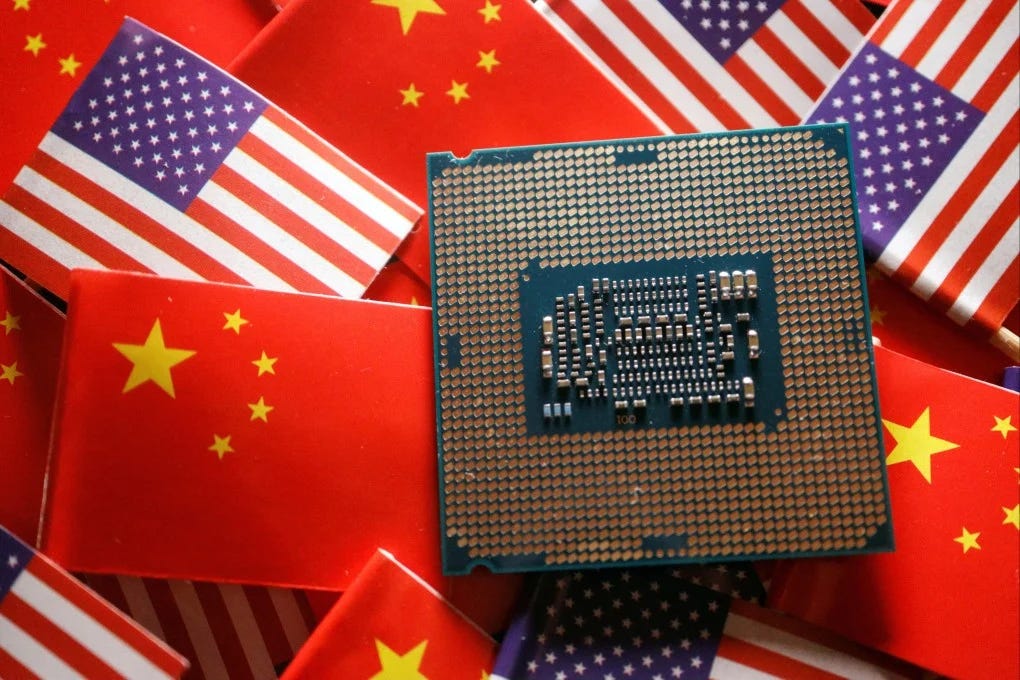
Chinese semiconductor company ChangXin Memory Technologies (CXMT) is increasing efforts to produce high-end DRAM chips amid ongoing US export controls that limit access to advanced chip-making technology. This initiative is part of China’s broader push for tech independence.
Why it matters: Success in developing domestic chip production capabilities could significantly reduce China’s reliance on foreign suppliers, reshaping the global semiconductor industry.
In other news:
⛓️ Hong Kong’s consortium chain projects drive blockchain adoption
The Guangdong-Hong Kong-Macau Greater Bay Area is leveraging blockchain technology to improve cross-border data sharing and trade facilitation. Projects like FISCO BCOS are streamlining processes for asset certification and trade logistics, showcasing the potential of blockchain in enhancing transparency and efficiency🤖 Zhipu AI secures Saudi funding to compete with OpenAI
Chinese AI company Zhipu AI has received a $400 million investment from Saudi Arabia’s Prosperity7 Ventures. The funding aims to accelerate Zhipu’s development of generative AI models, positioning it as a key competitor to OpenAI amid tightening US-China tech restrictions🇸🇬 Silence Labs Sets Up Web3 Security R&D Centre in Singapore
To tackle security issues in decentralised applications, Silence Labs is establishing a research and development centre dedicated to Web3 security in Singapore. This centre will focus on cryptographic innovations to support decentralised authentication.╳ BayaniPay Expands Global Reach with $3M Funding Round
Filipino-led fintech startup BayaniPay secured an additional $3 million in funding to expand its global payment processing services. This new capital aims to accelerate their efforts in automating cross-border financial transactions for Filipino workers abroad